
Introduction
Why It Matters
How We Find Out
Story Time
Common Hazards: Ulcer
Common Hazards:Food Poisoning
Activities
Self-Study Game
Introduction
 Can you imagine having a 30-foot-long tube running from your mouth to your anus? That is exactly what you have in your digestive system. Food contains nutrients, proteins, carbohydrates, and fats that the cells in our body use as energy. The process of digestion involves breaking down the food so that cells can use its components to fuel our body and keep it functioning. This module explains how organisms digest, absorb, and utilize food to obtain the materials they need for their cells to sustain life, grow, and multiply.
Usually in biological science, we learn most of what we know from studies of animals. But some of our first notions of what happens in digestion comes from the study of a live human patient who had an unhealed wound that led from the stomach to the outside. Read the interesting Story Time of Dr. Beaumont and his patient.
Objectives
After completing this lesson, each student should be able to:- Explain what we mean by “digestion” and how it occurs.
- Explain how absorption occurs and where in the digestive tract various nutrients are absorbed.
- Identify how the digestive system protects the body from bacteria and other harmful toxins.
- Summarize what we know about ulcers and food poisoning
Why It Matters
Why do we need a digestive tract?
If the body did not have a digestive tract, you could not enjoy your favorite pizza, hamburger, or other food. The human body must obtain its energy by eating food. Therefore, the main purpose of the digestive system is to provide the body with amino acids, carbohydrates, fats, and vitamins to keep our cells functioning. The digestive system provides these essential materials to the 75 trillion cells that live in our bodies. Wow! Do you know how many 75 trillion is?

The digestive tract takes both liquids and food and breaks them down into single molecules that can be absorbed by cells in the small intestine. These cells transport the molecules into the blood stream so that other cells in the body can use them. The digestive tract also serves to eliminate what your body doesn’t absorb during the digestive process.
Why do I have a stomach?
The stomach has two major functions in your body: one for digestion and one for defense. (See the illustration on the right.). Digestion breaks down proteins with acidic stomach juice, secreting enzymes that split up proteins into individual amino acids (see Cells Are Us unit on proteins). The defense component kills most foreign organisms that you ingest so that they can’t get into your bloodstream or anywhere else in your body. These organisms are destroyed by the highly acidic stomach fluid that is secreted within the stomach.
Why do you have two intestines?

The intestines are where the body absorbs all of the food, vitamins, fluid, and minerals that you eat. The intestines are long giving your body a greater opportunity to absorb more of what you eat. The small intestine breaks down proteins, carbohydrates, and fats so that they can be absorbed into the body and the bloodstream. The large intestine is where moisture is absorbed from what is left of the food. Anything that is not absorbed by the intestines is then passed through as solid waste (or feces).
Why are the liver and pancreas important in digestion?
Your liver secretes bile into your small intestine. This bile contains worn out red blood cells that must be removed from the body. If the old red blood cells are not removed, they can become toxic. The bile secreted by your liver also separates the fats that you eat so that they can be broken down by enzymes. (See the picture on the right.) Fat clumps together and when bile is not secreted into the small intestine, your enzymes are less efficient at breaking down fats into their fatty acid components.
The enzymes that break down these separated fats come from the pancreas, as do those enzymes that break down carbohydrates and proteins. The pancreas also secretes a basic solution that neutralizes the acidic solution left over from the stomach.
The pancreas also secretes insulin, which helps move glucose (blood sugar) from blood into cells. Diabetes is a common and very serious disease that results from lack of insulin. For more information about diabetes, click here.
How We Find Out
How do we learn about the different parts of the digestive system?
When we dissect a dead animal, we can see the different parts along the tract that begins in the mouth and ends in the anus. The cells can be seen by making microscope slides.How could we see where digestion begins?

How would you find out if saliva has any digestion function? A quick way to find out is to compare a piece of steak (which has a lot of protein) and a cracker (which has a lot of starches). Place the meat in your mouth and do not chew it for about 2 minutes. What happens? You should discover that the steak keeps its shape. Next, place the cracker in your mouth without chewing it for about two minutes. You should notice that the cracker becomes soft in your mouth and you may even taste something sweet. This is because the cracker is composed of carbohydrates, which saliva is able to digest at least partly. The carbohydrates in the cracker begin to be broken down into individual glucose molecules by an enzyme in your saliva. This enzyme only breaks down carbohydrates, not proteins. Since the steak was mostly composed of proteins, it did not start breaking down like the cracker.
How do we know what goes on in our stomach?
The stomach contains acids that turn most of your food into a liquid. Have you ever been sick and felt a burn in the back of your throat after vomiting? If you have, then you have experienced the power of the acids in your stomach. Stomach secretions also contain strong enzymes. The digestive functions of the stomach were discovered during an experiment performed by Doctor Beaumont. In his experiment, Doctor Beaumont tested the digestive power of stomach fluids through a “fistula” (see the graphic on the right) that connected the stomach to the patient’s skin. Doctor Beaumont tied food to a string, poked it through the fistula, and pulled it back out at varying times to see what had happened to the food. He observed that the food had changed, varying with the amount of time spent in the stomach and the nature of the food itself. One of the major things that was noticed by Doctor Beaumont is that proteins were especially degraded by the acids of the stomach.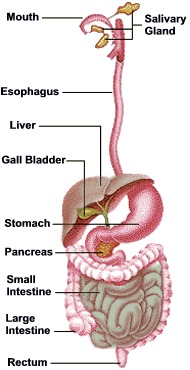


Story Time
William Beaumont (1785-1853)
In 1822, an Army surgeon stationed at Fort Mackinac on the upper Michigan peninsula would change medical science. That surgeon, William Beaumont, was introduced to a 19-year-old gunshot victim, an employee of the American Fur Company. The patient, Alexis St. Martin, had multiple wounds, as you might expect from a shotgun. One of his wounds penetrated the stomach. Alexis agreed to let Beaumont experiment with him, allowing the surgeon to insert a six-inch tube into his stomach by way of an opening to the outside. Beaumont was able to directly observe the release of stomach secretions in response to Alexis’ eating different foods. He was also able to collect stomach contents, place them in glass tubes, and observe how much food was digested and the length of time it took for the food to break down. For centuries, many people believed that the stomach was hot and somehow “cooked” the food, acting as a fermenting vat or grinding mill. Beaumont, with the help of Alexis, proved that those superstitions were false.
Medicine in the early nineteenth century was primitive. Doctors did not realize the importance of cleanliness. For the pain of rheumatism, Beaumont and fellow doctors prescribed opium, wood resin, and turpentine. Despite such uninformed and primitive medicine, Beaumont proudly claimed that none of his 200+ patients died.
William Beaumont had five sisters and three brothers, one of whom also became a physician. The children grew up on a farm in Connecticut. When William was 22, he tried to teach school. For a time, he was his town’s schoolmaster as well as secretary for the local debating society. Beaumont decided that he wanted something different, he wanted to become a doctor. William’s interest in medicine was likely stimulated by one of his school teachers, Silas Fuller, who later became a physician and served in the medical corps. In those days, there were not many medical schools and no standards for medical training. Some “doctors” practiced medicine with NO formal training. At age 26, William learned medicine by serving as an apprentice with two established physicians in Vermont. William received his license to practice surgery within a year. When the War of 1812 started, William joined the Army’s medical corps and served in several battles, receiving a citation for bravery. When the war ended three years later, William re-entered civilian life and set up a practice in Plattsburgh, New York. Apparently unsatisfied with private practice, William re-joined the Army four years later and was stationed at Fort Mackinac, where he was to conduct his experiments on digestion.
Even without war, life in the Army was pretty miserable in those days. The doctors sometimes had to sleep outdoors during the cold and wet Northern winters. “Hospitals” were commonly set up in barns or tents. William’s pay was $30 per month. The hospital at Fort Mackinac had totally unacceptable conditions. In the winter, snow would actually blow into the building through cracks. In the summer, beds had to be moved around to keep patients from being rained on. Needless to say, medical supplies and equipment were limited. They often went for months without a thermometer!
 Yet under these conditions, William conducted experiments on Alexis (his photo is on the right) that were the beginning of modern physiology, the science of bodily functions. Luckily, throughout the experiments, Alexis did not develop an infection under William’s care. William could not get the stomach wound to heal, however. This was not all bad though, since it was the leakage of food that compelled William to put in a tube that could be closed off. And the tube, of course, gave William the chance to make direct observations on digestive processes. William was certainly not a scientist in the modern sense of the word. But he possessed one of the key characteristics of any good scientist: curiosity. He was tenacious, pursing his experiments even when difficult and inconvenient.
While Alexis was recovering, William got him to stay around the hospital by hiring him as the family’s live-in handyman. One of the more bizarre experiments that William conducted on Alexis included dangling a piece of food from a piece of string through the tube into the stomach. At hourly intervals, William pulled the string out and determined how much food had been digested. Different types of food (carbs, proteins, fats) were dangled through the tube in order to observe differences in the digestive rate. William performed similar experiments in glass containers, by removing stomach juices and putting different foods into the containers.
Among Beaumont’s observations, he discovered that gastric juice had to be warm in order to digest food. Cold gastric juice was ineffective. He also noticed how milk coagulated before digestion and how vegetables took longer to digest than other foods (due no doubt to their fiber content).
 Beaumont did some of the first experiments involving the emotional/mental influence on digestion. Being angry, for example, was seen to impair digestion. All of these experiments were conducted over a span of several years with Alex St. Martin.
During a tour of duty at Jefferson Barracks, near St. Louis, William and his wife became close personal friends with Lt. Robert E. Lee and his family. Lee later became a famous Confederate General during the Civil War. William finally left the Army in 1839, because they wanted him to go to Florida as part of the war against the Seminole Indians. William stayed on as a civilian doctor in St. Louis. He made about $10,000 per year, which was vastly more than he earned in the Army. In 1853, William slipped on an icy step in St. Louis, hit his head, and suffered a major hemorrhage. The trauma triggered an infection, and William died.
Given the primitive Army hospitals that William had to work in, he would be probably be surprised at the major medical complex of 70 buildings at Fort Bliss that has been named in his honor: William Beaumont Army Medical Center. The Center has a capacity of 600 beds and employs 1,500 military and 700 civilian personnel–a great change since the medical conditions of the 1800’s! What became of Alex St. Martin? Actually, Alex lived some 58 years after he was shot. The hole in his stomach (called a “fistula”) never healed. He complained from time to time of indigestion. Alex died of alcoholism and old age (he lived to be 86). To prevent anyone from examining his stomach wound or performing an autopsy, the family deliberately left Alex’s body to decompose in the hot sun for four days. They buried the body in a deep, unmarked grave in a churchyard.
References:
Beaumont, W. 1833. Experiments and Observations on the Gastric Juice and the Physiology of Digestion. F. P. Allen. Plattsburgh.
Horsman, Reginald. 1996. Frontier Doctor: William Beaumont, America’s First Great Medical Scientist. Univ. Missouri Press, Columbia, Missouri
Nelson, R. B. III. 1990. Beaumont: America’s First Physiologist. Grant House, Geneva, Illinois.
Common Hazards: Ulcer
Ulcers
An ulcer is a lesion in the mucus lining of the stomach. The mucus protects the underlying cells in the wall of the stomach from the toxic juices in the stomach. These juices contain a high concentration of HCl, which is toxic to the cells due to its highly acidic nature. An ulcer can become serious if not treated because prolonged exposure to HCl will eventually cause bleeding at the exposed portion of the stomach wall.
Causes
The leading cause of ulcers is a recently discovered bacterium. This bacterium, Helicobacter pylori (photo on left), was discovered in the early 1990’s by a veterinarian who was studying ulcers in pigs. This bacterium resides in about 30% of the population; these individuals have a much greater risk of developing ulcers. The chances of any person getting an ulcer are increased if they are exposed to certain chemicals or emotions. Nonsteroidal anti-inflammatory drugs (NSAIDs) such as aspirin, ibuprofen, or stronger medications used in the treatment of arthritis or chronic inflammatory disease and ethyl alcohol (alcohol in alcoholic beverages) can weaken or break the mucus barrier that normally protects stomach cells from the acid. An ulcer can also be caused by stress and anxiety because these emotions cause an increase in the amount of HCl secreted by the cells of the stomach. Patients that suffer from severe infections or injuries are at a much greater risk of developing ulcers due to a breakdown in the mucus lining of the stomach.
Treatment
Treatment of ulcers includes the use of drugs to treat bacteria, reduce stomach acid, and protect the stomach lining. Antibiotics are used to treat bacteria, antacids are used to reduce stomach acid, and bismuth subsalicylate, a component of Pepto-Bismol®, is used to protect the mucus lining of the stomach. The most effective way to combat ulcers is a two-week treatment of these three types of drugs.To learn more about ulcers visit the following websites: http://www.niddk.nih.gov/health/digest/pubs/hpylori/hpylori.htm
http://www.niddk.nih.gov/health/digest/summary/nsaids/index.htm
http://www.sleh.com/FactSheets/fact-d12-peptic.html
http://www.helico.com/h_general.html
Common Hazards:Food Poisoning
Food Poisoning
Food poisoning is caused by improper cooking and storage of foods, poor hygiene, or an unsafe food source. By cooking food well, using good hygiene, and watching what you eat, you will avoid consuming harmful bacteria.
Causes
There are about twenty different species of bacteria and several species of protozoan parasites (protozoa: one-celled animals) that can cause food poisoning. Symptoms of food poisoning are nausea, vomiting, abdominal cramps, and diarrhea. Contrary to popular opinion, food poisoning does not always occur immediately after eating an infected food. Instead, it can be caused by food eaten several days prior to the onset of food poisoning.Treatment
The best solution for food poisoning is to let the body treat the food poisoning on its own. Vomiting and diarrhea are the body’s method of removing contaminated food. Through this process, the body may lose a great deal of water, making you dehydrated quickly. It is important that the body’s fluid levels are replaced after vomiting and diarrhea by drinking liquids, including: Gatorade®, 7-UP®, apple juice, broth, bullion or Pedialyte®. These fluids can keep you from losing too much water as your body fights the food poisoning.All cases of restaurant food poisoning should be reported to your county public health department so that other people can be protected. However, it may not be easy to know when or where you ate the bad food. Different species of bacteria/protozoa can take longer before infecting an individual enough for symptoms to appear.
It is essential to see a physician if diarrhea lasts longer than 24 hours, vomiting lasts longer than 12 hours, if there is blood in the stool, fever, excessive vomiting or diarrhea that cause severe muscle cramps, or an inability to keep down any fluids for 12 hours.

Prevention
Ways to prevent food poisoning include washing your hands, cleaning tools used in preparing foods (including cutting boards, knives, sponges, and dishcloths), washing fruits and vegetables, cooking all food thoroughly, keeping foods very hot or very cold, refrigerating all leftovers within two hours of cooking, defrosting meat in the refrigerator or microwave, and by not buying canned goods that are dented, bulging, or rusted. Wash hands before, during, and after preparing food. When you are washing your hands, use warm water and soap for twenty to thirty seconds. Always wash your hands after touching raw meat, fish, or poultry, and after using the toilet.To learn more about food poisoning, visit the following websites: http://www.health.vic.gov.au/foodsafety/index.htm
http://kidshealth.org/kid/ill_injure/sick/food_poisoning.html
http://www.nlm.nih.gov/medlineplus/ency/article/001652.htm
http://www.webmd.com/food-recipes/food-poisoning/default.htm
http://www.partselect.com/JustForFun/Food-Poisoning-Prevention.aspx
Activities
Activity One
Activity Two
Orientation
This activity encourages students to think about different parts of the digestive processes. It reinforces key ideas and gives students an opportunity to illustrate what they have learned through the unit.
Materials
Activity 2 Journal Page (right mouse click and select “open in a new window” to open as a MS Word document)
Reflecting on Digestion: Structures & Processes
Answer the following questions about information from this unit.
- How would an individual have to alter their eating habits if a large portion of the stomach were removed?
- A person with anemia has a low red blood cell count. One type of anemia is pernicious anemia, which occurs when an individual doesn’t have a sufficient amount of vitamin B12. Why would people who have had either their stomach or the end of their small intestine removed develop pernicious anemia? Is vitamin B12 essential in your diet or can your body make it on its own?
- Why don’t you get sick from your own fecal bacteria? Describe some ways your body protects you from consuming bacteria.
- Imagine if your liver stopped secreting bile. Describe the consequences by applying what you have read about the liver and bile.
Activity Three
Orientation
This activity focuses on key concepts from the “Common Hazards” section. Students will reflect on the nature of stomach ulcers and the bacteria that cause them. Questions may be completed using the Activity 3 Journal Page and information from the unit.
Materials
Activity 3 Journal Page (right mouse click and select “open in a new window” to open as a MS Word document)
Ulcers & Bacteria of Digestion
Answer the following questions about information from this unit.
- Can you think of what would eventually happen to the stomach if an ulcer was left untreated?
- Can you think of how an antibiotic kills only bacteria but not the cells in your body? What structural feature might be different in bacteria than in your cells?
- Speculate on why the ulcer-causing bacteria can survive in your stomach, but not other types of bacteria. What condition exists in the stomach that the ulcer causing bacteria would have to withstand?
Activity Four
Orientation
The questions in this activity encourage students to apply the concepts from across this unit. Students should answer questions using the journal page, using web, library, or other resources if necessary.
Materials
Activity 4 Journal Page (right mouse click and select “open in a new window” to open as a MS Word document)
Optional: library or web resources about organ systems & digestionApplying Important Concepts
Using your activity 4 journal page, answering the following with what you now know about digestion:
- What is heartburn? How does it happen? (Think about the structure in the digestive tract that is close to the heart and not protected by mucous.)
- Make a list of foods that humans could not eat if they did not have a liver? Why not?
- Why can cows eat grass and humans cannot? What do they do different during digestion than humans? If you have ever seen a cow what are they always doing with their mouth? Do you think that cows have an extra organ in their digestive tract to help them digest grass?
- Diabetes is a genetic metabolic disorder that affects all races, particularly Hispanics. Diabetes occurs when your cells do not receive enough glucose. The symptoms of diabetes are high blood sugar level and glucose in the urine. Pretend you are a doctor and you have a patient who displays these symptoms. Which hormone would you conclude is not being produced? What organ normally produces this hormone? Can you think of possible ways to administer the hormone to your patient? When would you think the best time to administer this hormone would be?
If you are interested in learning more about the prevalence of diabetes among Hispanics, visit the National Disease Information Clearinghouse website. - Apply your knowledge and speculate on a general pathway in the body that could stimulate the contraction of the diaphragm and the abdominal muscles that stimulate vomiting. Begin with a trigger/receptor listed in the “What We Know” section and finish with the muscles that are stimulated. Your pathway should list the steps a signal would take to get from the trigger/receptor to the muscles that make you vomit. You should incorporate your knowledge from other organ systems, particularly the nervous system. You may use resources on the web or at the library for additional information, but be sure to list your sources.
Activity Five
Orientation
This activity involves dissecting the digestive tract.
Materials
- a digestive tract for digestion – consult teacher
- rubber gloves to protect against any infection the animal might have had
- scissors, knife or scalpel, smocks/aprons, trays
Activity 5 Journal Page
Before you start, you might want to take an Internet dissection tour of the frog. Click here.
There are also electronic dissection systems that charge a fee. They have more features than the free system above. You may want to check the following sites:- froguts.com (virtual cutting blade, sound effects)
- digitalfrog.com (add or substract organs with a mouse click; built-in quizzes)
- tactustech.com (virtual reality cutting blade)
- biolabsoftware.com (combines physiology and anatomy)
- animalearn.org (basic and advanced levels of dissection)
Following the Tract
Beginning with the esophagus, note the following structures, in order:
- stomach
- small intestine
- pancreas
- liver
- large intestine
- colon
- anus
Cut into each section along the tract to note the different internal structures.
Activity Six
Orientation
This is a short demonstration to help reinforce the functions of each component of the digestive system.
Materials
- Digestion Lesson Plan
- Worksheet
Before you start, you might want to take an Internet tour of the human digestion process. Click here


